
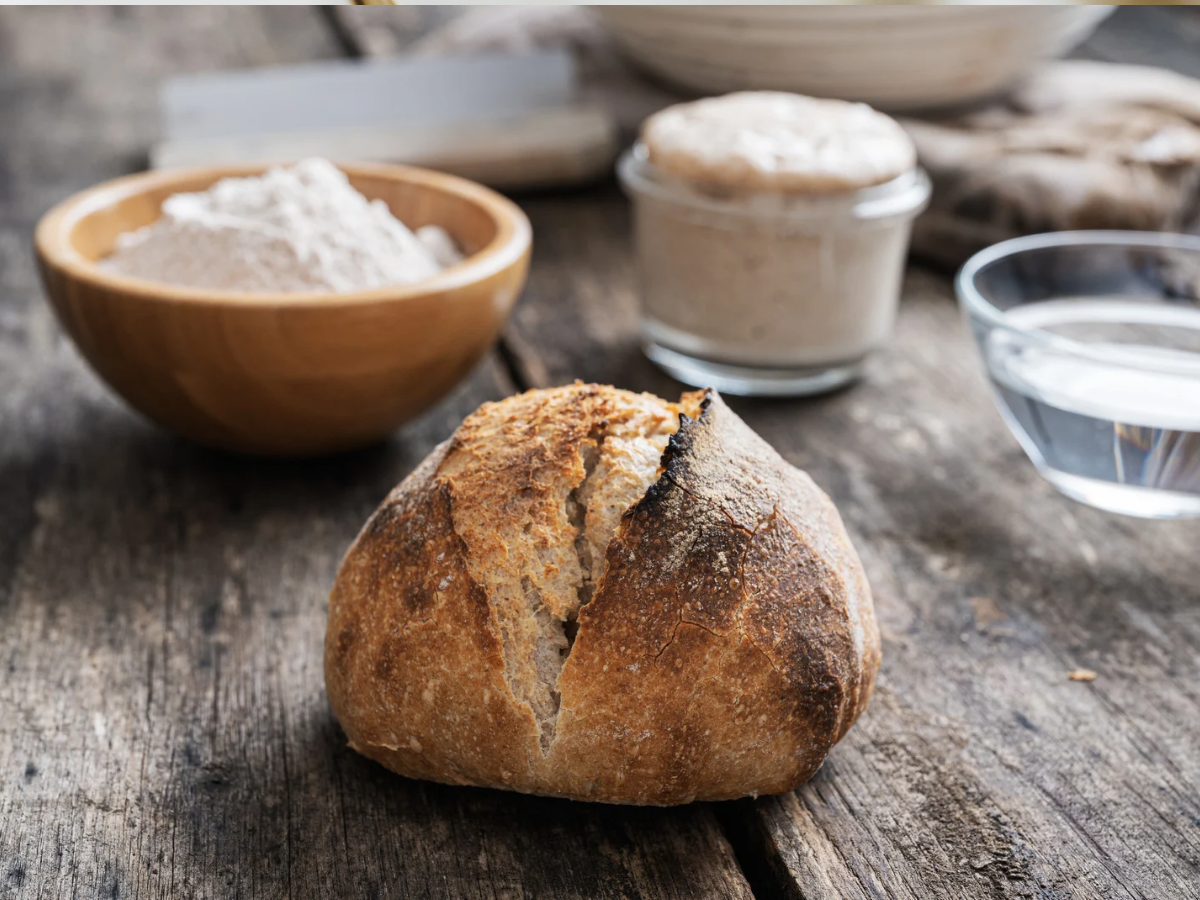
Welcome to the world of sourdough baking! If you’ve been dreaming of crafting your own delicious, tangy loaves of sourdough bread, starting with a dehydrated sourdough starter is a great way to begin. Dehydrated starters are convenient, easy to store, and a fantastic way to ensure you always have a starter on hand. In this guide, we’ll walk you through the steps to successfully revive and nurture your dehydrated sourdough starter.
What is a Dehydrated Sourdough Starter?
A dehydrated sourdough starter is a dried form of a sourdough culture that contains wild yeast and bacteria. Unlike a liquid starter, it’s in a powdered or flaked state, which makes it more stable and easier to store for long periods. When you’re ready to bake, you simply rehydrate it and feed it to bring it back to its bubbly, active state.
Supplies You’ll Need
- Dehydrated sourdough starter: You can purchase dehydrated or fresh starter at our farmstead if you’re local, or you can send us a message and we’ll ship it to you!
- Filtered water/Spring water: Avoid using tap water if it contains chlorine, as it can inhibit yeast activity.
- Flour: Use unbleached all-purpose flour or whole grain flour for feeding.
- Glass Jar: For combining ingredients and feeding/discarding starter.
- Measuring spoons and cups: For accurate measurements.
- A clean cloth or coffee filter: To cover the jar during fermentation.
- A scale: Optional but useful for precise measurements.
Step-by-Step Guide to Reviving Your Dehydrated Sourdough Starter
1. Rehydrating the Starter
- Measure the Starter: Start by measuring out 1-2 tablespoons(or 2 ounces) of dehydrated sourdough starter into a clean glass jar.
- Add Water: Pour in 1/2 cup of lukewarm, filtered water. Mix gently to dissolve the dehydrated starter into the water.
- Let it Sit: Cover the bowl with a cloth or coffee filter and let it sit at room temperature for 12-24 hours. This allows the yeast and bacteria to reactivate and start growing.
2. Feeding the Starter
- Add Flour: After the initial rehydration period, add 1/2 cup of flour to the mixture. Stir well until you have a thick, cohesive paste.
- Rest and Ferment: Cover the bowl again and let it sit at room temperature for 12-24 hours. You should start to see bubbles forming as the starter ferments and becomes active.
- Repeat the Feeding: For the next 3-5 days, continue feeding your starter once every 24 hours. Each time, discard half of the mixture and feed it with 1/2 cup of flour and 1/4 cup of water. This regular feeding helps build up the starter’s strength and acidity.
3. Testing the Starter’s Readiness
- Observe Bubbles: An active starter will have bubbles throughout, a noticeable rise, and a pleasant tangy smell.
- Perform the Float Test: To check if your starter is ready for baking, take a small spoonful and gently drop it into a glass of water. If it floats, it’s ready. If it sinks, continue feeding and wait another day.
Maintaining Your Starter
Once your starter is active and bubbly, you can either continue to keep it at room temperature and feed it daily or store it in the refrigerator for less frequent feedings. When refrigerated, feed it once a week to keep it healthy.
Baking with Your Starter
With your starter now active, you’re ready to bake delicious sourdough bread! Follow a sourdough recipe that suits your taste, and enjoy the rich, tangy flavor that only a sourdough starter can provide.
Conclusion
Starting with a dehydrated sourdough starter is a simple and effective way to begin your sourdough journey. With a bit of patience and care, you’ll have a thriving starter that will help you bake some truly amazing bread. Be sure to dehydrate some of your own active starter to always have a backup on hand or to share with friends and family. Enjoy the process and happy baking!