
This post contains affiliate links, which means I may earn a small commission (at no extra cost to you) if you make a purchase through those links. I only share products I truly use and love. Thank you for supporting Fruitful Farmstead!
There’s something timeless about homemade ice cream—simple, creamy, and just sweet enough to bring a little joy to any summer day. Whether it’s scooped into cones for sticky-fingered kids or served alongside a fresh cobbler at your next backyard dinner, this recipe is one of our homestead favorites.
The best part? You only need a few real, wholesome ingredients—and no mystery additives.
Simple Homemade Vanilla Ice Cream
Ingredients:
- 3 cups whole milk
- 3 cups heavy whipping cream
- 1 cup sugar
- 2 tablespoons vanilla extract (the better the quality, the better the flavor!)
- ½ teaspoon salt
Equipment:
- Ice cream churn or ice cream maker
- Whisk
- Large mixing bowl or pot
- Freezer-safe container with lid
- Optional: Silicone spatula
Directions:
- Whisk it up: In a large bowl or pot, combine all the ingredients. I usually give mine a quick heat on the stove to make sure the sugar melts. Or, you can whisk until the sugar is fully dissolved—this may take a couple minutes. Don’t rush it—this step helps ensure a smooth, creamy texture.
- Chill (optional but helpful): If you have time, refrigerate the mixture for an hour or two. Starting with a cold base helps the ice cream churn faster and fluffier.
- Churn: Pour the mixture into your ice cream maker and follow the manufacturer’s instructions. Most machines take 20–30 minutes to reach soft-serve consistency.
- Freeze: For a firmer scoop, transfer the churned ice cream to a freezer-safe container and freeze for 2–4 hours.

Tips & Add-Ins:
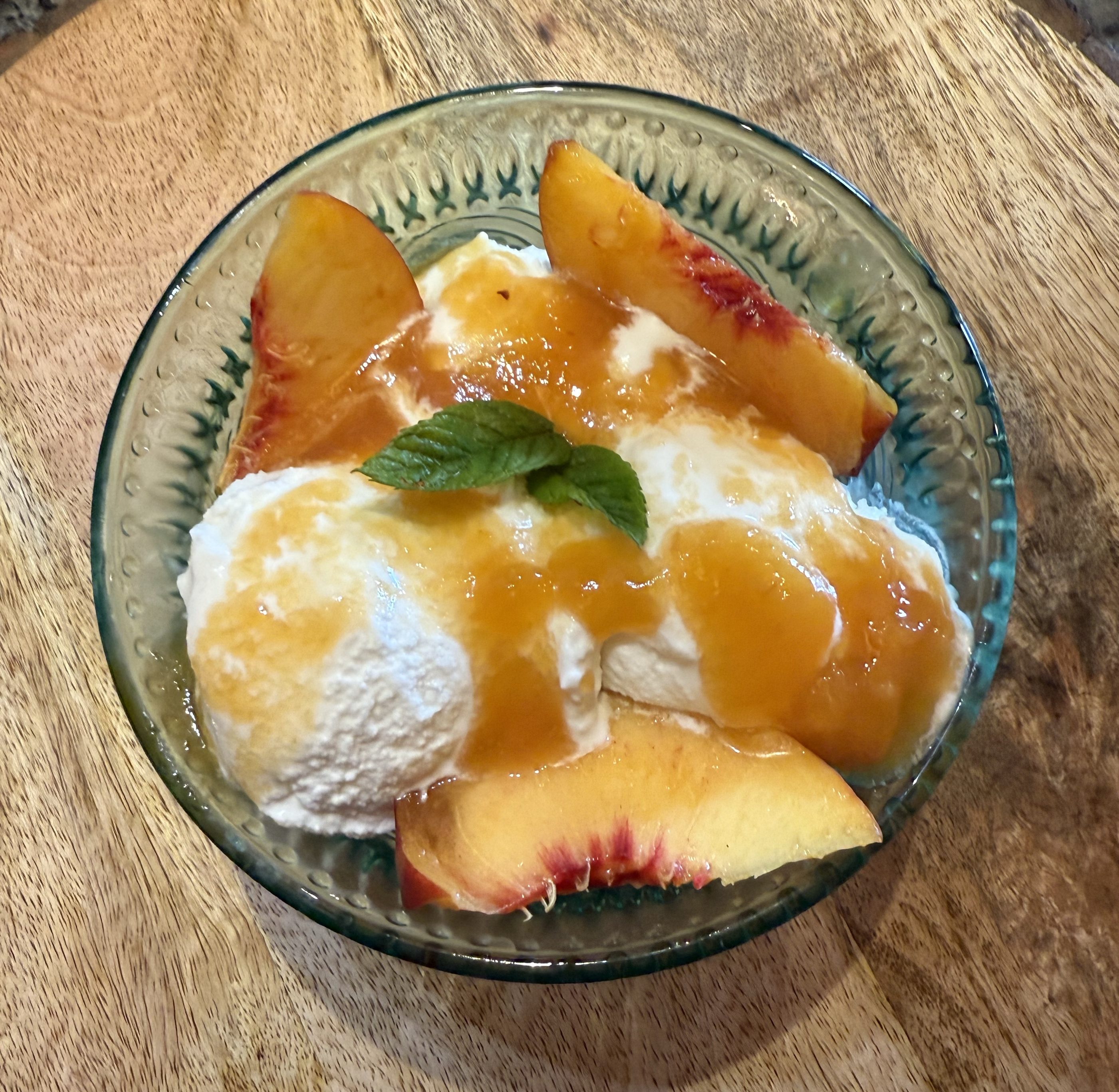
- Swirl in fruit jams(Peach Butter), crushed cookies, or chocolate chips just before transferring to the freezer.
- Add fresh berries on top for a patriotic treat (hello, 4th of July!).
- Want it eggier? This recipe is egg-free for simplicity, but you can swap in a custard-style base if you prefer.
Why We Love It:
This ice cream is everything we want in a summer dessert—simple, nostalgic, and rich in flavor without being overly sweet. It’s perfect on its own or dressed up for a celebration.
Whether you’re serving it at your next family gathering, or just as a treat after a long day of homesteading, this is a recipe you’ll turn to again and again.

Simple Homemade Vanilla Ice Cream
Equipment
- Ice Cream Maker
- Whisk
- Large mixing bowl or pot
- Freezer-safe container with lid
Ingredients
- 3 cups Whole Milk
- 3 cups Heavy Whipping Cream
- 1 cup Sugar
- 2 tbsp Vanilla Extract (high quality recommended)
- 1/2 tsp Salt
Instructions
- Combine Ingredients • In a large bowl or pot, whisk together milk, cream, sugar, vanilla extract, and salt. • Optional: Gently heat the mixture on the stove just until the sugar is dissolved—do not boil.
- Chill (Optional but Recommended) • Refrigerate the mixture for 1–2 hours before churning. A cold base helps the ice cream churn faster and improves texture.
- Churn • Pour the chilled mixture into your ice cream maker and churn according to manufacturer instructions (usually 20–30 minutes) until it reaches soft-serve consistency.
- Freeze • Transfer to a freezer-safe container and freeze for 2–4 hours until firm, or serve immediately for soft-serve style.
Notes
Serving Ideas:
- Topped with fresh berries for a patriotic Fourth of July dessert
- Served with homemade cobbler or pie
- Drizzled with peach butter or honey
- Layered in ice cream sandwiches
One response to “Homemade Vanilla Ice Cream: A Sweet Summer Staple”
[…] over pancakes, ice cream, or […]